Creating vs. consuming humor: evidence that writing or performing humor may have deeper benefits than just watching it
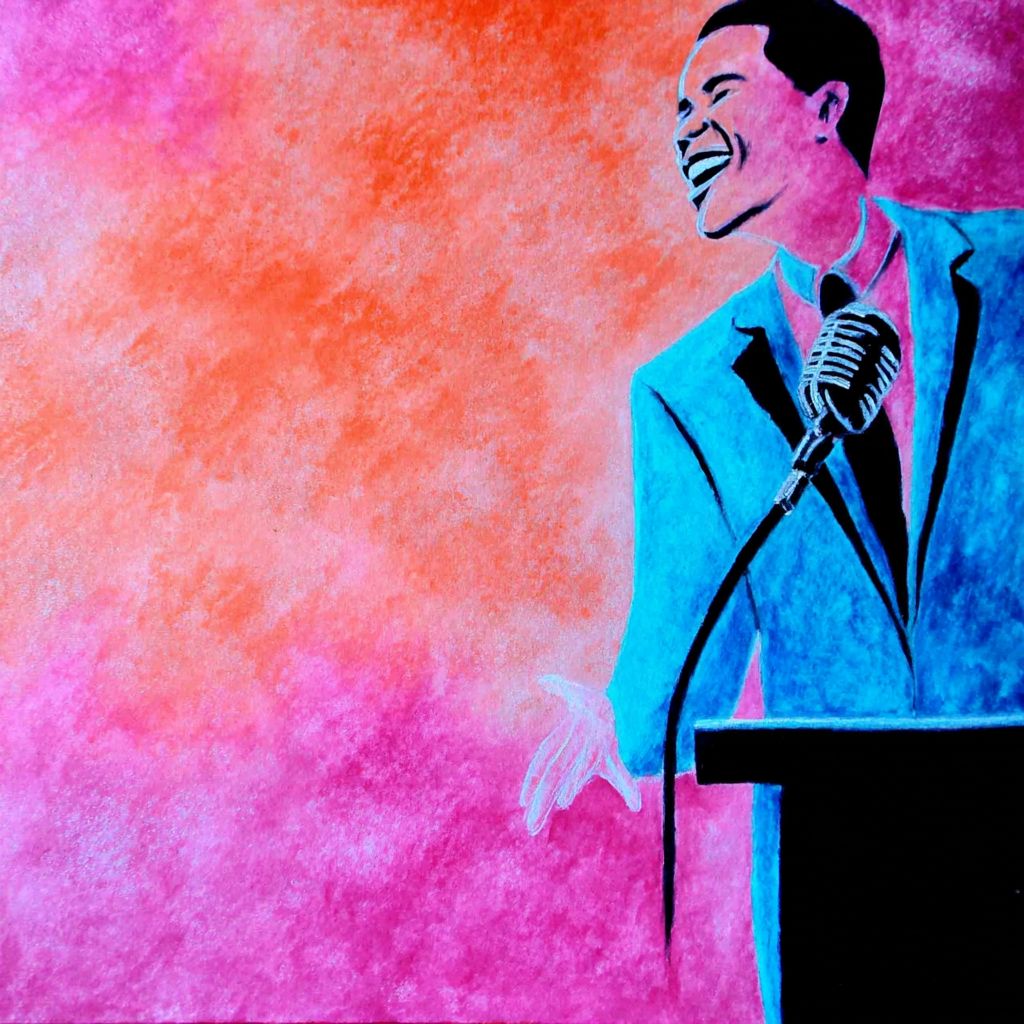
Here’s a question that rarely gets asked: Is it better to watch a comedy special or to write your own jokes?
For most people, the answer seems obvious. Watching is easier, more reliable, and requires no particular talent. Why struggle to craft a punchline when professional comedians have spent years perfecting theirs? If the goal is to laugh and feel better, surely consuming humor achieves that goal with less effort and more consistent results.
But research is beginning to suggest that this intuition may be wrong—or at least incomplete. While passively watching comedy certainly has benefits, actively creating humor appears to engage different psychological processes, with potentially deeper and more lasting effects on mental health. The difference isn’t just about effort; it’s about what happens in your mind when you shift from audience member to author.
This chapter explores the emerging evidence for “active humor”—the practice of writing, performing, or otherwise creating humor yourself—and why it may offer something that Netflix binges cannot.
The Passive Humor Baseline: What Watching Comedy Does
Before exploring the benefits of creating humor, it’s worth acknowledging what consuming humor actually accomplishes. The research here is substantial and genuinely encouraging.
Watching comedy reduces stress hormones. Studies consistently show that laughter—whether from a funny video, comedy show, or humorous interaction—decreases cortisol and epinephrine levels. A 2019 meta-analysis of randomized controlled trials found that laughter and humor interventions significantly decreased depression and anxiety symptoms in adults. Even brief exposure to comedy can shift physiological markers in measurable ways.
Watching comedy improves mood. This one seems almost too obvious to mention, but the effects are more robust than simple distraction. Humorous content triggers endorphin release, activates reward circuitry in the brain, and can shift emotional tone for hours after viewing. For people experiencing mild to moderate distress, a well-chosen comedy can provide genuine relief.
Watching comedy can foster social connection. Even when viewed alone, comedy often involves a kind of imagined social experience—we feel connected to the comedian, to the audience laughing with us, to the broader community that shares our sense of what’s funny. Shared viewing experiences strengthen relationships, and discussing comedy with others builds intimacy and rapport.
These benefits are real and shouldn’t be dismissed. The prescription to “watch something funny” when you’re feeling down is legitimate advice backed by science. But it’s also limited advice, because passive consumption engages only some of the psychological mechanisms through which humor can help us.
The Case for Active Humor: What Changes When You Create
When you shift from consuming humor to creating it—whether by writing jokes, doing improv, crafting witty observations, or performing comedy—something qualitatively different happens. Several distinct psychological processes come into play:
Cognitive Reframing
Creating humor requires looking at experience from unexpected angles. To make something funny, you have to find the absurdity, the incongruity, the alternative interpretation. This is precisely the cognitive skill that therapists try to teach clients in cognitive-behavioral therapy: the ability to step back from automatic thoughts and see them differently.
When you write a joke about your anxiety, you’re not just describing anxiety—you’re actively searching for a way to reframe it that generates laughter. This process changes your relationship to the material. What was purely painful becomes material to be worked with, shaped, and ultimately transcended through craft.
David Granirer, founder of the Stand Up For Mental Health program, describes this transformation: “In comedy, you talk about things from the past that are painful, but you turn them into comedy, so there’s a wonderful way of reframing what you’ve been through. There is a cognitive shift where all of that bad stuff from the past just becomes great material. And all of a sudden, they’re proud of what they’ve survived, instead of feeling ashamed of it.”
Mastery and Agency
When you watch comedy, you’re a recipient. When you create it, you’re in control. This shift from passive to active, from audience to author, engages what psychologists call “self-efficacy”—your belief in your ability to influence outcomes.
For people struggling with mental health issues, the feeling of powerlessness is often central to their distress. Depression tells you that nothing you do matters. Anxiety insists you can’t handle what’s coming. Creating humor—and especially performing it—provides direct evidence against these beliefs. If you can make a room full of people laugh, you’ve demonstrated competence in a visible, immediate way.
Granirer has seen this repeatedly with his Stand Up For Mental Health participants: “When you’ve made a room full of people laugh, you can do anything!” The confidence gained from successfully performing comedy often generalizes to other areas of life, providing a foundation for further growth.
Narrative Construction
Research on expressive writing, pioneered by psychologist James Pennebaker, shows that constructing narratives about difficult experiences can improve both mental and physical health. The act of organizing chaotic experience into a coherent story appears to help process trauma and reduce its ongoing impact.
Comedy writing is a particular kind of narrative construction—one that imposes not just coherence but also a comic frame on experience. When you write about your worst breakup as a comedy bit, you’re creating a story with a particular structure: setup, development, punchline. This structure provides distance and resolution that straight autobiographical writing might not achieve.
The narrative arc of a joke—building tension, then releasing it through unexpected resolution—may actually mirror healthy emotional processing. You take something difficult, hold it long enough to build it up, and then discharge it through laughter. The material that was stuck becomes material that moves.
Social Connection and Identity
Performing humor creates a unique kind of social bond. When you share something personal and vulnerable and people laugh with you rather than at you, something powerful happens. You’ve been seen, accepted, and celebrated for exactly who you are—including the parts you might normally hide.
For people whose mental health struggles carry stigma—which is nearly everyone with mental health struggles—this acceptance can be transformative. Stand Up For Mental Health performances deliberately put people with psychiatric diagnoses on stage talking about their experiences. Audiences respond by laughing, cheering, and reconsidering their assumptions about mental illness.
The performers benefit doubly: they experience acceptance from the audience, and they often shift their own identity in the process. “I’m someone with schizophrenia” becomes “I’m a comedian who happens to have schizophrenia.” The mental health condition becomes one aspect of identity rather than its defining feature.
Evidence from Comedy Programs
Several structured programs have emerged that teach people to create and perform humor, often specifically targeting mental health benefits. While rigorous randomized controlled trials remain limited, the available evidence is encouraging.
Stand Up For Mental Health
Founded by counselor and comedian David Granirer in 2004, Stand Up For Mental Health teaches stand-up comedy to people with mental health issues, culminating in public performances. The program has trained over 700 participants across more than 500 shows in Canada, the United States, and Australia.
While formal outcome studies are limited, Granirer identifies three primary impacts: building confidence and self-esteem (performing is “life-changing,” making many participants feel they can do anything); tackling public stigma (audiences are forced to reconsider stereotypes when they see someone with schizophrenia or bipolar disorder being “hilarious”); and the therapeutic benefits of laughter itself.
Some participants have gone on to pursue comedy careers, but career advancement isn’t the point. “In terms of having a career in standup comedy, that’s not why people are coming to the program,” Granirer explains. The goal is psychological transformation, with comedy as the vehicle.
Improv for Anxiety
Improvisational comedy has received more research attention than stand-up, partly because it’s easier to study in controlled settings. Multiple programs now use improv specifically as a mental health intervention.
The Improv for Anxiety program at The Second City Training Center in Chicago combines improv comedy techniques with cognitive-behavioral therapy principles for treating social anxiety disorder. The program harnesses four therapeutic elements: group cohesiveness (building trust with fellow improvisers), play (engaging in low-stakes creative activity), exposure (repeatedly facing social performance situations), and humor (using comedy to defuse anxiety).
Research on improv interventions has found significant effects. A 2023 study led by Peter Felsman found that adolescents participating in improvisational theater showed decreases in both social anxiety and “intolerance of uncertainty”—the tendency to experience negative reactions to uncertain situations. Brain imaging studies show that improvisation alters neural activity, quieting self-judgment centers while activating creative and language regions.
“Engaging repeatedly in the unknown in this fun and playful way would teach people that there’s something nice to be discovered in the unknown,” Felsman explains. “It’s not always a terrifying thing.”
Humor Training Programs
Beyond performance-oriented programs, several structured “humor trainings” aim to develop humor as a coping skill. The most widely studied is Paul McGhee’s “7 Humor Habits Program,” which teaches participants to find more humor in daily life, develop their own comic perspective, and use humor to manage stress.
A 2018 study at the University of Zurich found that after eight weeks of completing McGhee’s program, participants reported higher levels of positive emotions like cheerfulness and greater life satisfaction. The study also confirmed something important: sense of humor is malleable. It can be learned and developed through systematic practice.
A randomized controlled trial with patients suffering from depression, anxiety, and adjustment disorder found that humor training improved humor-related outcomes and was generally well-received by participants. Interestingly, group dynamics mattered enormously—groups with better interpersonal cohesion showed stronger results, suggesting that the social context of humor development is itself therapeutic.
Why Creating Differs from Consuming: Theoretical Perspectives
Several theoretical frameworks help explain why active humor creation might have effects beyond passive consumption:
The Broaden-and-Build Theory
Barbara Fredrickson’s broaden-and-build theory proposes that positive emotions don’t just feel good—they expand cognitive and behavioral repertoires, building lasting psychological resources. Creating humor generates positive emotions while simultaneously engaging creative problem-solving, social connection, and perspective-taking. This combination may build resources more effectively than positive emotions alone.
Self-Distancing
Creating humor about personal experiences requires stepping back from those experiences—viewing them from enough distance to find the absurdity or incongruity. This self-distancing, which Viktor Frankl emphasized as central to therapeutic humor, may be easier to achieve through active creation than passive consumption. When you write a joke about your problems, you’re necessarily positioned as observer rather than victim.
Active vs. Passive Coping
Research on coping strategies distinguishes between active coping (doing something about a problem) and passive coping (avoiding or distracting from it). While watching comedy might serve as a form of positive distraction, creating comedy is inherently active—you’re doing something with your difficult material rather than escaping from it. Active coping strategies generally predict better long-term outcomes than passive ones.
Flow and Engagement
Creating humor can induce flow states—periods of complete absorption in an activity where time seems to disappear and self-consciousness fades. Flow experiences are associated with enhanced well-being and may have lasting effects that brief positive emotional experiences don’t provide. The challenge of crafting a joke or responding in the moment during improv provides exactly the kind of skill-challenge balance that promotes flow.
Practical Applications: Bringing Active Humor Into Your Life
You don’t need to become a professional comedian to benefit from active humor. Here are some practical ways to shift from consuming to creating:
Humor Journaling
Instead of (or in addition to) keeping a traditional journal, try keeping a humor journal. Each day, write down something that struck you as funny or absurd. Challenge yourself to find humor in situations that initially seemed purely frustrating or stressful. You don’t need to craft polished jokes—you’re training yourself to notice and articulate the comic aspects of experience.
Rewriting Your Stories
Take an experience that bothers you—an embarrassing moment, a failed project, a difficult interaction—and try writing it as if you were telling it to make someone laugh. What’s the setup? Where’s the absurdity? What’s the punchline? You’re not minimizing the experience; you’re finding a new angle on it.
Taking an Improv Class
Improv classes are widely available and don’t require any prior comedy experience. The research suggests benefits accrue even in brief interventions, so a single eight-week course might be enough to experience meaningful effects. Look for classes that emphasize supportive group dynamics over performance pressure—the goal is playful engagement, not competitive excellence.
Social Humor Practice
Challenge yourself to make one person laugh each day—not by forwarding a meme or sharing a video, but by saying something funny yourself. This can be low-stakes: a witty observation, a playful comment, a self-deprecating aside. The point is to practice generating humor in real-time social contexts.
Comedy Writing Exercises
Try writing three jokes each day on any topic. They don’t have to be good—in fact, most won’t be. The practice develops the mental habit of looking for comic possibilities and becomes easier with repetition. Some writing teachers suggest the “plus one” method: take any statement and try to add a funny twist or observation.
Caveats and Limitations
The evidence for active humor’s superiority over passive consumption, while encouraging, comes with important caveats:
Research is still limited. Most studies on comedy interventions have small sample sizes, lack rigorous control groups, or rely on self-report measures. The field needs more randomized controlled trials comparing active and passive humor interventions head-to-head.
Individual differences matter. Not everyone responds the same way to humor interventions. People with severe depression may initially struggle with humor creation, and forcing the attempt could backfire. The studies that have found positive effects often note that group dynamics and individual engagement strongly moderate outcomes.
Humor style matters. Creating humor isn’t automatically beneficial—the type of humor matters enormously. Self-defeating humor, where you relentlessly mock yourself to gain others’ approval, is associated with worse mental health outcomes. Any humor practice should aim toward self-enhancing and affiliative styles rather than aggressive or self-defeating ones.
Context matters. Creating humor in a supportive group environment is very different from struggling alone to write jokes. The social support, encouragement, and shared laughter that come with comedy classes or programs may be as important as the humor creation itself.
Passive humor still helps. Nothing in this chapter should be read as dismissing the value of watching comedy. For people who are depleted, depressed, or simply not interested in creating humor, consuming it remains a valid and effective intervention. The goal isn’t to feel guilty about Netflix—it’s to recognize that additional options exist.
From Audience to Author
There’s something fundamentally different about making people laugh versus watching someone else do it. When you create humor—when you take your own experience, your own observations, your own struggles and find a way to transform them into something that generates laughter—you’re not just consuming a product. You’re exercising a capacity.
That capacity involves cognitive flexibility, creative thinking, social connection, emotional regulation, and the courage to be vulnerable. It involves stepping back from your own experience far enough to see its absurdity while staying close enough to speak about it authentically. It involves failing repeatedly—because most jokes don’t land—and persisting anyway.
These are exactly the capacities that mental health challenges often erode and that recovery requires rebuilding. Depression narrows perspective; comedy demands perspective-taking. Anxiety freezes spontaneity; improv requires embracing the unknown. Shame insists we hide our struggles; stand-up puts them on stage.
None of this means you should stop watching comedy specials or feel guilty about your sitcom habits. Passive humor consumption is genuine self-care with measurable benefits. But if you’ve only ever been in the audience, consider what might happen if you stepped onto the stage—even if that stage is just your own journal or a low-stakes improv class.
The research suggests that the shift from consumer to creator—from audience to author—may unlock benefits that watching alone cannot provide. And even if the research is wrong, there’s something inherently worth celebrating about learning to generate your own laughter rather than waiting for someone else to provide it.
Sources and Suggested Readings
Research Articles
Felsman, P., Seifert, C. M., Sinco, B., & Himle, J. A. (2023). Reducing social anxiety and intolerance of uncertainty in adolescents with improvisational theater. The Arts in Psychotherapy, 82, 101985. https://doi.org/10.1016/j.aip.2022.101985
Felsman, P., Gunawardena, S., & Seifert, C. M. (2020). Improv experience promotes divergent thinking, uncertainty tolerance, and affective well-being. Thinking Skills and Creativity, 35, 100632. https://doi.org/10.1016/j.tsc.2020.100632
Felsman, P., Seifert, C. M., & Himle, J. A. (2019). The use of improvisational theater training to reduce social anxiety in adolescents. The Arts in Psychotherapy, 63, 111-117. https://doi.org/10.1016/j.aip.2018.12.001
Falkenberg, I., Klügel, K., Bartels, M., & Wild, B. (2011). Implementation of a manual-based training of humor abilities in patients with depression: A pilot study. Psychiatry Research, 186(2-3), 454-457. https://doi.org/10.1016/j.psychres.2010.10.009
Krueger, K. R., Murphy, J. W., & Bink, A. B. (2017). Thera-prov: A pilot study of improv used to treat anxiety and depression. Journal of Mental Health, 28(6), 621-626. https://doi.org/10.1080/09638237.2017.1340629
Phillips Sheesley, A., Pfeffer, M., & Barish, B. (2016). Comedic improv therapy for the treatment of social anxiety disorder. Journal of Creativity in Mental Health, 11(2), 157-169. https://doi.org/10.1080/15401383.2016.1182880
Ruch, W., Hofmann, J., Rusch, S., & Stolz, H. (2018). Training the sense of humor with the 7 Humor Habits Program and satisfaction with life. Humor: International Journal of Humor Research, 31(2), 287-309. https://doi.org/10.1515/humor-2017-0099
Shaw, H., Robertson, S., & Sherlock, L. (2023). “Beyond laughter”: A systematic review to understand how interventions utilise comedy for individuals experiencing mental health problems. Frontiers in Psychology, 14. https://doi.org/10.3389/fpsyg.2023.1161703
Tagalidou, N., Distlberger, E., Loderer, V., & Laireiter, A.-R. (2019). Efficacy and feasibility of a humor training for people suffering from depression, anxiety, and adjustment disorder: A randomized controlled trial. BMC Psychiatry, 19, 93. https://doi.org/10.1186/s12888-019-2075-x
Tagalidou, N., Loderer, V., Distlberger, E., & Laireiter, A.-R. (2018). Feasibility of a humor training to promote humor and decrease stress in a subclinical sample: A single-arm pilot study. Frontiers in Psychology, 9, 577. https://doi.org/10.3389/fpsyg.2018.00577
Zhao, J., et al. (2019). A meta-analysis of randomized controlled trials of laughter and humour interventions on depression, anxiety and sleep quality in adults. Journal of Advanced Nursing, 75(11), 2435-2448. https://doi.org/10.1111/jan.14000
Books and Programs
Drinko, C. (2013). Theatrical Improvisation, Consciousness, and Cognition. Palgrave Macmillan.
Granirer, D. (2007). The Happy Neurotic: How Fear and Angst Can Lead to Happiness and Success. Warwick Publishing.
McGhee, P. E. (2010). Humor as Survival Training for a Stressed-Out World: The 7 Humor Habits Program. AuthorHouse.
Pennebaker, J. W. (1997). Opening Up: The Healing Power of Expressing Emotions. Guilford Press.
Organizations and Resources
Stand Up For Mental Health. Program information and show schedules. https://standupformentalhealth.com
The Second City Wellness Program. Improv for Anxiety and other therapeutic improv programs. https://www.secondcity.com
The Improv Project (Detroit). School-based improvisational theater for youth. https://ymcadetroit.org
Improv Therapy Group. Training for mental health professionals in therapeutic improv. https://www.improvtherapygroup.com